

Breast Cancer in Young Women: No Family History or Pain Does Not Mean No Risk
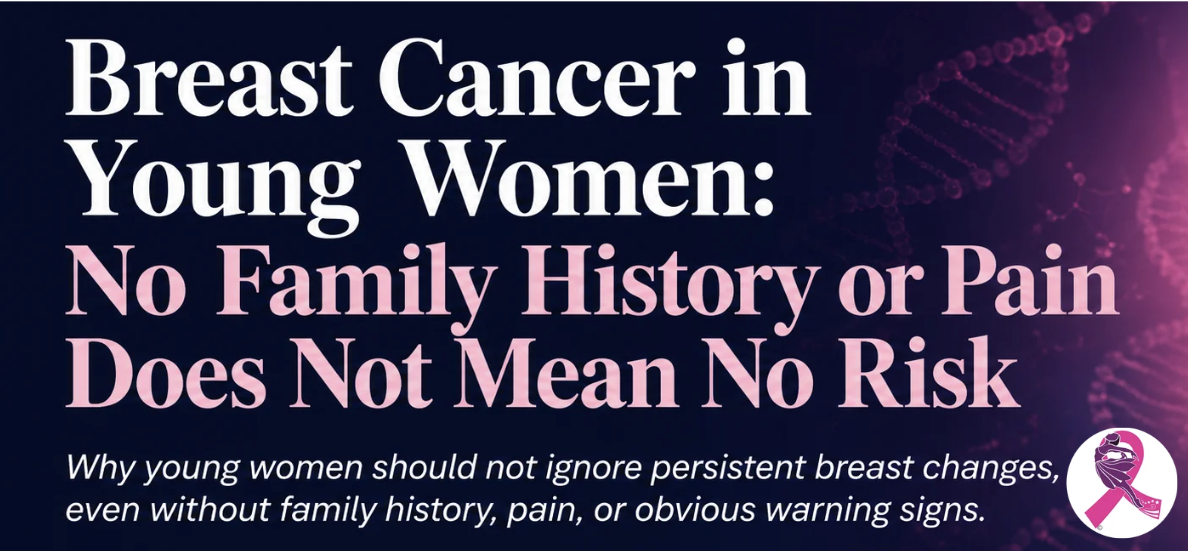
No Family History or Pain Does Not Mean No Risk for Young Women.

Most BCYW Cases are Sporadic, not Hereditary.
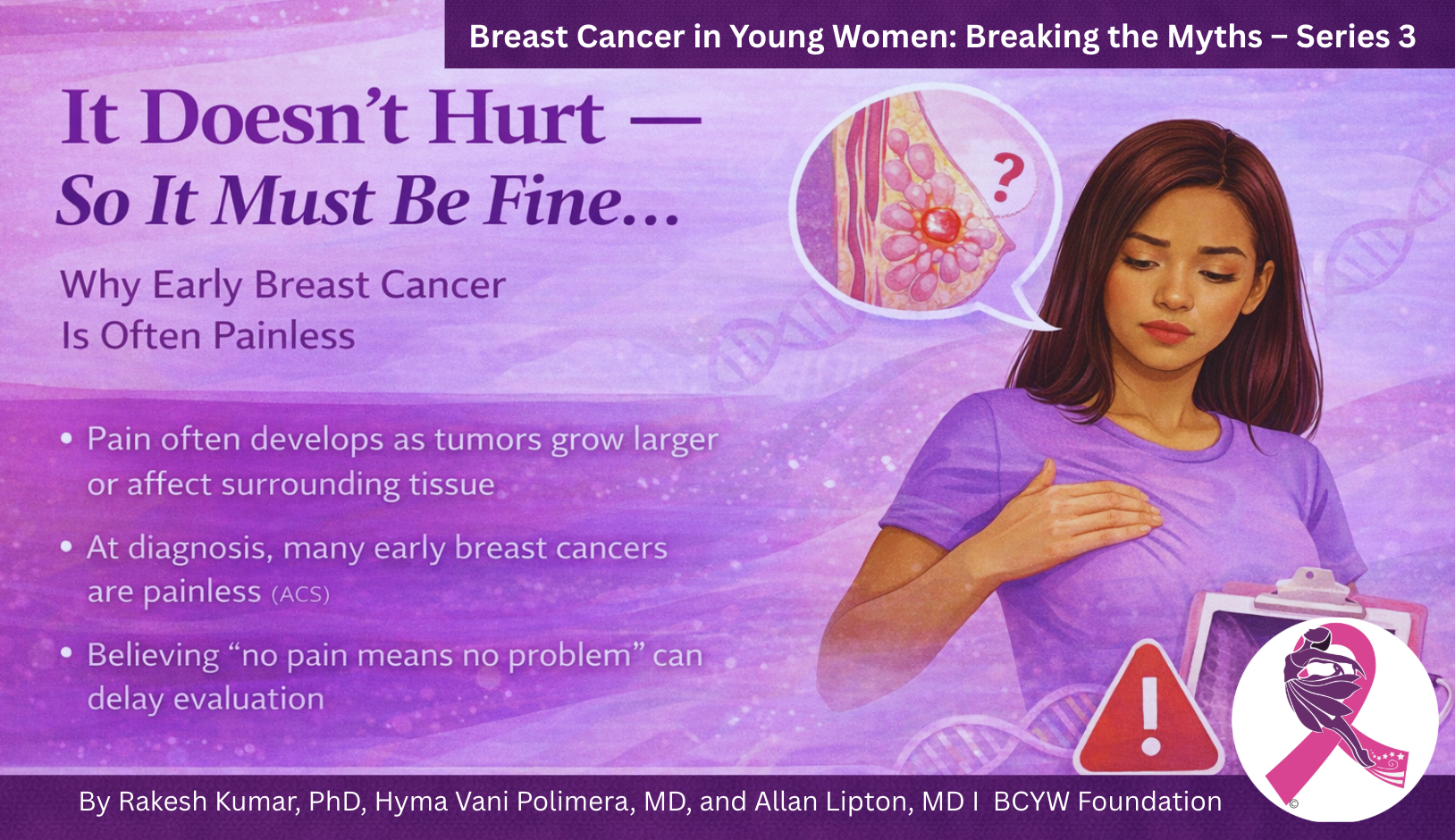
Why Most Early BC are Painless
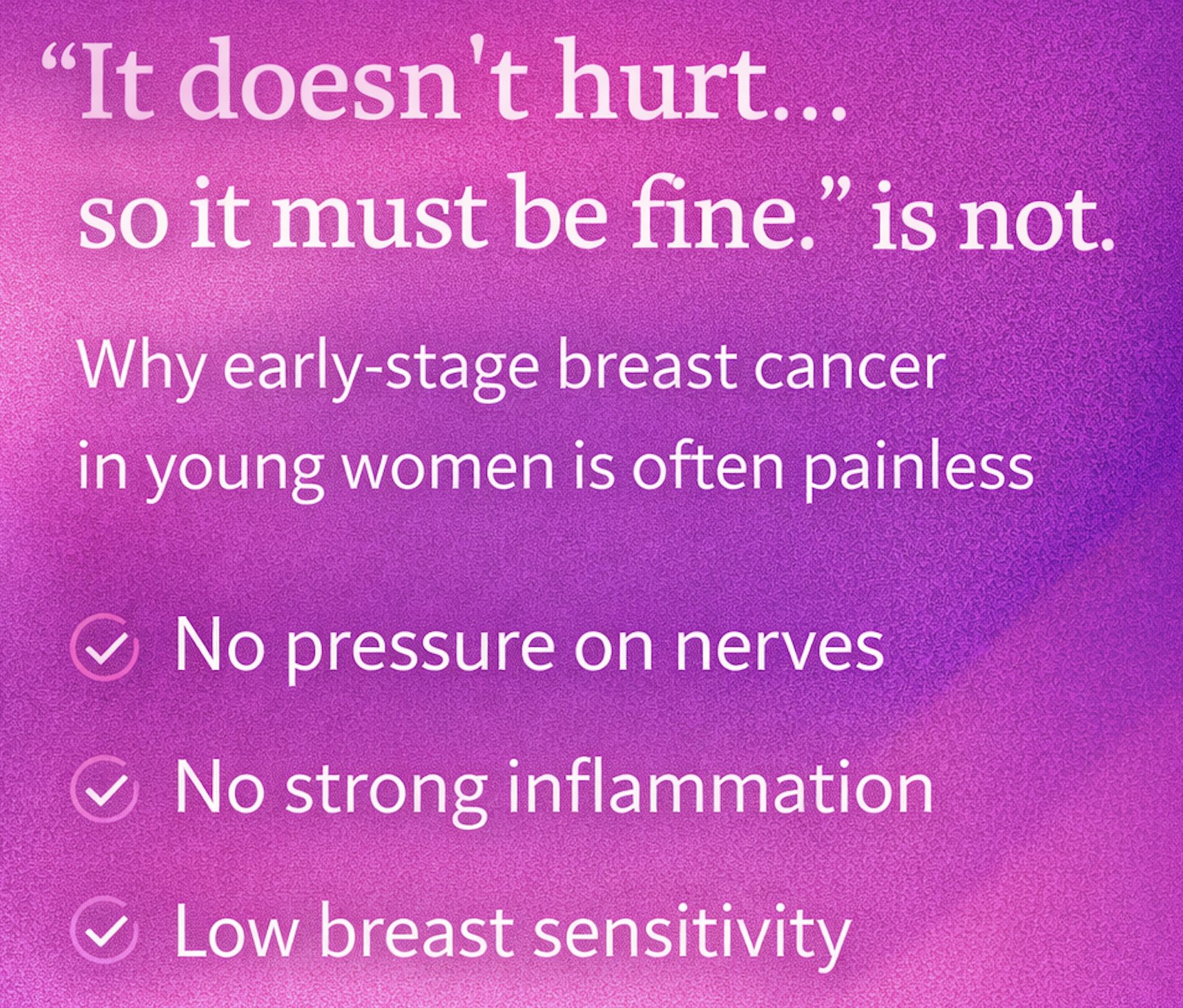
No Pain Does Not Mean No Problem
Why young women should not ignore persistent breast changes, even without family history, pain, or obvious warning signs.
DENVER, CO, UNITED STATES, May 26, 2026 /EINPresswire.com/ -- Every year, thousands of women under 40 are diagnosed with breast cancer, yet one of the biggest barriers to early detection is not only access to care—it is the persistence of myths that shape how young women perceive risk, symptoms, imaging, genetics, pain, and prevention. To address this growing breast health gap, the Breast Cancer in Young Women Foundation (BCYW Foundation) launched a 12-part LinkedIn educational article initiative, “Breaking the Myths,” examining the most common and clinically important myths surrounding breast cancer in young women—one topic at a time.The Breast Cancer in Young Women Foundation has recently published two new awareness articles by the experts, addressing a pair of myths that can delay breast cancer evaluation in young women: “I have no family history, so I’m not at risk” and “If it doesn’t hurt, it can’t be cancer.” Together, the articles deliver one breast health awareness message: breast cancer in young women should not be ruled out by the absence of family history or pain. Young women should pay attention to new, persistent, or unexplained breast changes — even when they feel well, have no known inherited risk, or do not experience discomfort.
WHY THIS MATTERS
Many young women associate breast cancer risk mainly with inherited mutations or a strong family history. Family history and genes such as BRCA1 and BRCA2 are important, but most breast cancers are not directly linked to a known hereditary mutation or recognized family history. The absence of family history can create false reassurance and delay evaluation when symptoms appear.
At the same time, pain is often viewed as the body’s warning signal. But early-stage breast cancer often develops silently. A painless lump, thickening, nipple change, skin dimpling, or persistent localized change may still require medical evaluation.
NO FAMILY HISTORY DOES NOT MEAN NO RISK
The article “No Family History? You’re Still at Risk: Understanding Sporadic Breast Cancer in Young Women” (reference 1 below) explains that many breast cancers arise sporadically, through acquired biological changes that occur over time rather than inherited mutations present at birth. The article benefited from the clinical insights and experience of coauthor Tamara Hussong Milagre, a trained nurse and prominent patient advocate for hereditary cancer syndromes, based in Lisbon, Portugal.
These changes may involve DNA repair, cell growth, hormonal signaling, metabolism, environmental influences, lifestyle factors, breast density, reproductive history, and other risk pathways.
For young women, this distinction matters because symptoms may already be minimized due to age. When “no family history” is added to that assumption, evaluation may be delayed further.
NO PAIN DOES NOT MEAN NO PROBLEM
The article “Why Early-Stage Breast Cancer in Young Women Is Often Painless (And Why That’s Dangerous)” (reference 2 below) explains that pain is not a reliable early warning sign. Early tumors may be small, localized, and not yet pressing on nerves or invading surrounding tissues. Breast tissue also has limited pain sensitivity, which means a concerning lesion may develop without discomfort. The article benefited from the insights and experience of coauthors Hyma Vani Polimera, MD, and Allan Lipton, MD, from Penn State Medical Center, Hershey, USA.
The BCYW Foundation emphasizes that breast cancer is not defined by pain. It is defined by change.
Young women should seek evaluation for a new lump or thickening, a change in breast size or shape, skin dimpling or puckering, nipple inversion, nipple discharge, or a persistent localized change, whether or not it hurts.
THE BREAST HEALTH MESSAGE
The Foundation urges young women to know what is normal for their own bodies and to act when something feels new, different, persistent, or unexplained.
No family history does not mean no risk.
No pain does not mean no concern.
Young age does not eliminate the need for evaluation.
Most breast changes are benign, but timely evaluation provides reassurance when findings are harmless and enables earlier diagnosis when they are not.
A THOUGHT TO CARRY
Do not wait for a family history.
Do not wait for pain.
Do not wait for certainty.
Early detection begins when myths are replaced with awareness — and when persistent breast changes are evaluated, not explained away.
FOR FULL DETAILS, readers are encouraged to read these articles on LinkedIn.
Reference 1: No Family History? You’re Still at Risk: Understanding Sporadic Breast Cancer in Young Women. By Rakesh Kumar, PhD and Tamara Hussong Milagre, BN
https://www.linkedin.com/pulse/family-history-youre-still-risk-breast-cancer-in-young-women-found-km0oc/
Reference 2: Why Early-Stage Breast Cancer in Young Women Is Often Painless (And Why That’s Dangerous): By Rakesh Kumar, PhD, Hyma Vani Polimera, MD, and Allan Lipton, MD.
https://www.linkedin.com/pulse/why-early-stage-breast-cancer-young-euqic/
ABOUT THE BCYW FOUNDATION
The BCYW Foundation is a leading global organization dedicated solely to breast cancer in young women. Founded three years ago, it brings together a diverse network of scientists, oncologists, surgeons, survivors, NGOs, and partners from 35 countries. The foundation is advancing its targeted awareness and research efforts and highlighting emerging BCYW advances through its peer-reviewed, open-access Journal of Young Women Breast Cancer and Health. Through evidence-based analysis and cross-sector collaboration, the Foundation works to improve outcomes and long-term survivorship horizons for young women diagnosed with breast cancer. Donate to support the BCYW Foundation's mission.
DISCLAIMER: This information is for educational purposes only and is not a substitute for professional medical advice. Please consult a doctor for any concerns or questions.
Rakesh Kumar, Ph.D., Founder and CEO
Breast Cancer in Young Women Foundation
bcywf@breastcancerinyoungwomen.org
Visit us on social media:
LinkedIn
Bluesky
Instagram
Facebook
YouTube
X
Legal Disclaimer:
EIN Presswire provides this news content "as is" without warranty of any kind. We do not accept any responsibility or liability for the accuracy, content, images, videos, licenses, completeness, legality, or reliability of the information contained in this article. If you have any complaints or copyright issues related to this article, kindly contact the author above.
