

Your best source on education news from Asia and the Pacific
Provided by AGP
Key receptor loss drives tooth-bone fusion in mice
May 18, 2026
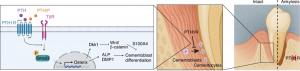
By AI, Created 10:38 AM UTC, May 18, 2026, /AGP/ – Researchers in the U.S. and China found that loss of PTH1R signaling in periodontal cells causes abnormal cementum growth, ligament damage and tooth-bone fusion in adult mice. The study points to a molecular explanation for ankylosis and other tooth eruption disorders that may help guide future therapies.
Why it matters: - The study identifies a molecular safeguard that helps keep teeth attached to the jaw without fusing to bone. - The findings may help explain human eruption disorders, infra-occluded teeth, periodontal degeneration and ankylosis tied to PTH1R mutations. - The work could inform future treatments aimed at preserving periodontal tissue or slowing tooth-bone fusion.
What happened: - Researchers studied adult mice with conditional deletion of PTH1R in DMP1-Cre–targeted periodontal cells. - The work was published in Bone Research on April 27, 2026, in Volume 14, Article 46. - The paper is titled “Loss of PTH 1 receptor signaling in periodontal cells drives cementum dysfunction and molar ankylosis in mice.” - The study was led by Prof. Xue Yuan of Indiana University School of Medicine and Prof. Teresita Bellido of the University of Arkansas for Medical Sciences.
The details: - Mutant mice developed severe periodontal ligament loss, shortened tooth roots, reduced alveolar bone height and extensive ankylosis. - The defects were concentrated in molars. Incisors were largely unaffected. - Tissue analysis found abnormal cementum overgrowth on the tooth root. - The periodontal ligament collagen network was badly disorganized. - The ankylosed tissue came from pathological cementum expansion, not from abnormal bone growth. - Molecular testing linked the damage to excessive activation of the Smad3-Osterix pathway. - The loss of PTH1R signaling also increased Dkk1 expression, which suppressed Wnt signaling that normally helps maintain periodontal balance. - The combined effect created a strongly pro-mineralization environment that drove excess cementum deposition and tooth-bone fusion. - The reference DOI is 10.1038/s41413-026-00533-5. - Indiana University School of Medicine listed its website as More information. - The source also listed an X account for International Journal of Oral Science: Social media page.
Between the lines: - The results suggest ankylosis can begin in the tooth-supporting tissues before bone itself becomes the main problem. - The molar-specific damage points to tissue-type differences that may matter for future diagnosis and treatment. - The pathway map is important because it links one receptor loss to both excess mineralization and loss of ligament structure. - The authors framed PTH1R as a long-term maintenance signal, not just a developmental factor.
What’s next: - The identified signaling pathways may become targets for therapies designed to preserve periodontal tissue. - Future research could test whether blocking Smad3-Osterix activation or restoring Wnt signaling reduces ankylosis. - The findings may help clinicians better understand why some teeth become resistant to orthodontic movement or are harder to retain. - Longer term, the work could support regenerative strategies for periodontal disease and craniofacial disorders involving abnormal mineralization.
The bottom line: - In mice, loss of PTH1R signaling breaks the balance that keeps cementum, ligament and bone separate, setting off tooth-root overgrowth and fusion to the jaw.
Disclaimer: This article was produced by AGP Wire with the assistance of artificial intelligence based on original source content and has been refined to improve clarity, structure, and readability. This content is provided on an “as is” basis. While care has been taken in its preparation, it may contain inaccuracies or omissions, and readers should consult the original source and independently verify key information where appropriate. This content is for informational purposes only and does not constitute legal, financial, investment, or other professional advice.
Sign up for:
Education Journal of Asia
The daily local news briefing you can trust. Every day. Subscribe now.
Check Your Email!
We sent a one-time activation link to: .
Confirm it's you by clicking the email link.
If the email is not in your inbox, check spam or try again.
Welcome back!
is already signed up. Check your inbox for updates.